Posts

Showing posts with the label English

Sunderland Literature Festival 2018

Image
Once again, the School of Culture was well represented at the annual Sunderland Libraries Literature Festival, with talks by Dr Geoff Nash on the sea as literary imagery from Anglo-Saxon poetry to the novels of Amitav Ghosh; Dr Delphine Doucet on 'religion at the dinner table - a sixteenth century dialogue'; Dr Miguel Gomes on the Codex Amiatinus.  The festival also saw the launch of the latest offerings from Spectral Visions Press - the School's own in-house student-led publishing company.
Maria Fotiadou awarded PhD

Image
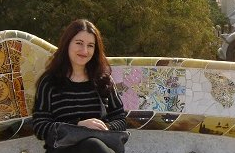
At the graduation ceremony on Friday 30th November 2018, Maria Fotiadou will receive her PhD. After achieving a First Class degree in English Language and Literature in the School of Culture in 2014, Maria was awarded a full scholarship by the School which allowed her to pursue research under the supervision of Dr Michael Pearce and Professor Angela Smith . The thesis is a wide-ranging study of the language of careers services as it is represented on UK university websites, with a particular focus on ‘employability’. Combining corpus linguistics and critical discourse analysis, Dr Fotiadou’s research reveals the nature of the discourse surrounding this problematic concept, as shown in an extensive and innovative analysis of repeated patterns of collocation and more extended phraseological clusters in a multi-million-word corpus. Her work is beginning to have an impact in the field of critical linguistics, with a double-length article based on her thesis research appearing in...

Codex 2018

Image
The latest edition of Codex   has been published. Are you interested in Newcastle's invasion preparations during the Second World War, North East miners and political reform in the 1830s or gender stereotyping and children's language? If so, visit Codex for articles on these topics and more from our class of 2018 graduates in the School of Culture.

Slow tv

Image
Professor Angela Smith  has given a paper at the  26th Ross Priory International Seminar on Broadcast Talk 2018 . Entitled 'Slow tv: the mesmerising antidote to political maelstroms', her talk traced the emergence of 'slow TV' as the antithesis of the fast-edited, fast-paced television that has developed as the dominant concept of the medium in the twenty-first century.  More recently, it has been heralded as the antidote to the rise of right-wing populist noise.  Whilst the early cable channels showed ambient images of burning fires or tropic fish tanks, slow tv is slightly more dynamic and deliberately edited to be relaxing as well as informative.  Many of the visual tropes in slow tv come from arthouse cinema, particularly the lingering shots and sense of stillness. Unlike ambient tv, it has a narrative but not all of them have a narrator.  The narrative is sometimes left to the viewer to work out, such as the original slow tv show,  Train Ride: Ber...

New novella from Sarah Dobbs

Image
A new novella by Dr Sarah Dobbs is due out in the autumn.  The Sea Inside Me (Unthank Books) is set in an England ravaged by civil strife and terrorism. An experimental zone, Newark-by-the-Sea has trialed the Process, the removal of traumatic memories to eliminate crime and fear from the minds of its citizens. Processing Officer Audrey is instructed to tail Candy, a girl resistant to the Process, whose memories are returning, As the Process is about to be rolled out countrywide, a darker, deep-rooted conspiracy coils smoke-like into view. Read more about this title on Unthank Book's website .

Post-Now: Synthetic futures in fiction

Image
We all know that novels are more than just stories; they often tell us about our lives and ourselves. This talk by Guy Mankowski  will consider how writers have taken fiction to its limit by questioning how we live now and how we might live in the future. Guy’s novel How I Left The National Grid examined how, in postmodern culture, subculture and nostalgia offer people some room to shape the world they want to live in. From the future societies described in Kazuo Ishiguro’s Never Let Me Go to the exotic technologies in JG Ballard’s Vermilion Sands , this session will also look at how literary fiction has imagined - and proposed - synthetic futures. Dr Guy Mankowski is the author of four novels: Letters from Yelena (Legend Press) was awarded an Arts Council Literature grant, used in GCSE training material by Osiris in 2015, and adapted for the stage. How I Left The National Grid (Zer0 Books) was written as part of a PhD in Creative Writing and published in the UK, US and Canada...

Hypermasculinity, Twitter and #MAGA

Image
Professor Angela Smith has recently given a paper at the 'Approaches to Discourse' conference at Georgetown University (Washington DC). She spoke on the concept of hypermasculinity, which was first theorised in the early 1980s. At that time masculinity was often perceived as being under threat from the great advances in gender equality made following the arrival of Second Wave Feminism.  Angela argued that in the last five years we have seen a rise in the performance of hypermasculinity on the national stage, often aligned with right wing politics and a heightened sense of national identity in face of a perceived over-reaching of liberalism.  Angela's paper explored how some politicians use social media to promote their messages, side-stepping the otherwise regulating voice of the mainstream media. She looked at tweets from the personal account of Donald Trump to offer an explanation for at least part of the appeal of the ‘Make America...

Gender in 'crisis', everyday sexism and the Twittersphere

Image
A new volume of essays entitled Crisis and the Media  features a chapter by Professor Angela Smith . In it, she explores how rejections of claims for equality are represented in the technology of the twenty-first century, but at the same time embody the language of a pre-feminist world and can thus be seen to at once empower and restrict feminist discourse. In this way, the crisis in gender relations is one that emerges in the 1990s in Westernised contexts and continues to develop into the twenty-first century, contributing to the emergence of a Fourth Wave of feminist action. As such, 'crisis' is employed to explore how various small events, seemingly insignificant in isolation, have been raised to public notice through social media to enhance the emergence of Fourth Wave Feminism in the last ten years. Smith, A. 2018. 'Gender in "crisis", everyday sexism and the Twittersphere.' In Patrona, M. (ed) Crisis and the Media . Amsterdam: John Benjamins, pp.231-260...

Academic exchange to India

Image
Dr Geoffrey Nash has recently visited the Aligarh Muslim University under an academic exchange programme undertaken as part of the Sir Syed Bicentenary celebrations. He engaged around 110 AMU faculty members and research scholars for workshops and tutorials on academic writing. The English Department also organized a three-day special lecture series delivered on 17th, 19th and 22nd of January. In the lecture, ‘From Postcolonialism to Islamophobia: An Academic’s Research Trajectory’, Dr Nash traced his journey as a scholar aiming to understand the East. In ‘Postcolonial Translation: The Arabic and the Anglophone Arab Novel’, he focused on the publishing industry and explicated how fiction writers from Arab countries struggle to get a wider audience for their works. In the last lecture on ‘Post 9/11 Writing and Islamophobia: Martin Amis’s Last Days of ‘Muhammad Atta’”, discussion focused on the problematic manner of representation of the mind of an ‘Islamic Fundame...

School of Culture Research Seminar

Image
Professor Angela Smith will be giving a talk in the School of Culture research seminar series. Her focus is Channel 4’s Naked Attraction . This is a show that opens with the assertion that ‘Online dat ing has been a complete nightmare […] with the status symbols we wear getting in the way of finding our perfect mate.’  With full nudity, lingering close-ups and graphic descriptions, many viewers took to Twitter to express dismay that the show had made it to mainstream television, and led to the Guardian referring to it as symptomatic of the dystopian media landscape of 2016. Angela's paper will explore how the shock of graphic nudity is ameliorated by the linguistic strategies of positive politeness that all participants seem to collude with. Such amelioration would appear to be a defence against accusations of voyeuristic and pornographic content on mainstream television. Wednesday 21 March 2018 Reg Vardy 104A, 4pm-5pm Light refreshments and Q&A after the talk

When minorities say no

Image
School of Culture PhD student Wjoud Almadani will be speaking at the first seminar in a series designed to showcase the work of PhD students across the university (details above). Everyone is welcome!

The language of European food labelling regulations

Image
Professor Angela Smith recently attended the 4th FoodKom Seminar at Queen Margaret University, Edinburgh.   Her paper, 'Tiny Print and Traffic Light Chaos', looked at how European food labelling regulations are applied in the British context to front of packaging.   Angela showed how the non-mandatory nature of the system has led to potentially confusing food labelling, exploring the semiotic properties of the packaging.   She concluded that the lack of standardisation and the non-mandatory nature of the system is often unhelpful and even confusing (particularly to those of declining eye sight), but that it could nevertheless be of use to the knowing consumer and so is of limited help.

Monstrous masculinities

Image
Dr Alison Younger has contributed a chapter to an Edinburgh University Press publication edited by Joanne Ella Parsons and Ruth Heholt. The volume, entitled The Victorian Male Body examines some of the main expressions and practices of Victorian masculinity and its embodied physicality. Alison's chapter - which explores dandyism and the gothic body - is called 'Monstrous Masculinities from the Macaroni to the Masher: Reading the Gothic 'Gentleman''.

Codex 2017

Image
The latest edition of Codex has been published . Are you interested in riots in South Shields or Turkish Gothic literature? If so, visit Codex for top work from our class of 2017 undergraduates at the School of Culture.

Two new chapters from Geoff Nash

Image
'Britain,' chapter 33 in WaĂ¯l Hassan, ed., The Oxford Handbook of Arab Novelistic Traditions , outlines the work of Arab British writers in the context of the volume’s examination of worldwide fiction in many languages by writers of Arab ethnicity. 'A fundamental aesthetic: Said Nursi’s re-writing of the Qur’an into the idiom of modernity' appears in Bridging the Divide: Essays on Language and Literature, and Islamic Studies – A Commemorative volume to mark the 60th birthday of Professor Abdur Raheem Kidwai (New Delhi: Viva books).  The piece discusses the Kurdish-Turkish Muslim revivalist Bediuzzaman Said Nursi’s project of re-writing Islam into a modern idiom.

Kazuo Ishiguro

Image
The award of the Nobel Prize for Literature 2017 to Kazuo Ishiguro , prompted Tencent - China's largest social media site - to contact Dr Barry Lewis , who has published widely on the Anglo-Japanese novelist. Read the interview here . Kazuo Ishiguro

Re-reading Spare Rib

Image
Professor Angela Smith has edited a collection of essays about Spare Rib , one of the most iconic symbols of Second Wave Feminism, whose influence has far out-lived the span of its publication (1972-1993).  Re-Reading Spare Rib (Palgrave Macmillan 2017) examines various aspects of the magazine - based on the digitised publication by the British Library in 2015 - in order to explore the ways in which it has influenced society in the twentieth and twenty-first centuries, as well as the lives of individual readers. By analysing several articles from a modern, post-feminist perspective, and using cross-generational interviews of Spare Rib readers and reflective accounts of reading the publication, the significance and endurance of the publication is demonstrated. Written by academics, experienced researchers and independent scholars alike, the inter-disciplinary nature of the text results in a multi-dimensional reading of Spare Rib suitable for both an academic and gen...

Sunderland Literature Festival 2017

Image
Once again, several members of the School of Culture will be taking part in the Sunderland Libraries Literature Festival (download the full programme here ). These events feature our staff/students: Colin Younger (Senior Lecturer): Expressive Writing as Therapy, City Library @ Museum & Winter Gardens, 10th October 3-4.30pm This workshop will explore expressive writing approaches to support mental health well-being as part of Mental Health Day. Dr Alison Younger (Senior Lecturer): Folklore and Fable in the North East, Houghton Library, 16th October 2-3pm This session will explore the extraordinary folklore and fables of North East England. Short Story Competition Launch , Waterstones, The Bridges, 16th October 5pm In association with Waterstones, the University of Sunderland will launch a Short Story Competition. Dr Geoff Nash (Senior Lecturer): The Gothic Terrorist: from Robespierre to Jihadi John City, Library @ Museum & Winter Gardens, 18th October 5-6.30pm Gothic, terroris...

Resurrection Man

Image
Heather Askwith Heather Askwith is a new Creative Writing PhD student in the School of Culture, under the supervision of Dr Sarah Dobbs . She is writing a novel called Resurrection Man as part of her thesis, which seeks to explore fears around the body from the Victorian Era and the parallels between this and contemporary fears. The novel will be set in two time periods and seeks to evoke the style of these periods as an exploration of narratology. In parallel with the writing of the novel, Heather will research the connections between gothic Victorian writing, modern horror writing and self-reflexive styles. She is interested in the development of horror fiction in response to developments in science and medicine. Her thesis seeks to explore the presentation of fears surrounding the body both in Victorian Gothic literature, and in contemporary modern texts, also considering a feminist angle and the presentation of female bodies.  Heather has been writing creatively for five years...

Sunderland graduate awarded prestigious research scholarship

Image
Rosie Hordon-Clark (who has a BA and MA in English from the School of Culture) has been awarded a funded, 4-year PhD Scholarship from the School of English at Dublin City University , under the supervision of Dr GearĂ²id O'Flaherty. Rosie will explore the relationship between Angela Carter and feminism: to what extent can Angela Carter be identified as a feminist; what kind of a feminist was Carter; and what areas of her work are at odds with feminist thought? Her research will provide a chronological analysis of a selection of Carter's work, exploring the changes in feminist positions that Carter adopts in response to the ambiguities and complexities of Second-Wave feminism.